
 Support
Trading Ideas
Get the edge with potential investments and opportunities
What is drawdown in trading and how does it work?
Drawdown is the percentage fall from a peak to a trough in an asset or portfolio. It plays an important role in measuring risk and guiding trading strategy and performance.

A guide to index trading and how it works
Index trading involves trading on the price of a market index rather than individual shares. These indices measure the performance of groups of assets across sectors or regions.

Hammer candlestick: meaning and explanation
The hammer candlestick is a well-known bullish reversal signal that appears after a decline, showing that buyers have begun to outweigh sellers.

Leverage in CFD trading: a complete guide
Leverage in CFD trading allows you to open a larger market position while committing only a small portion of its full value as margin. Although it can enhance potential returns, it also raises the risk of losses and additional costs, making it important to understand how margin, financing and risk management work before trading.

A comprehensive guide to trading crude oil
Crude oil prices respond to supply and demand, geopolitical events and global benchmarks such as WTI and Brent, requiring a balanced approach that combines technical analysis, fundamental research and effective risk control.

What is revenue in markets? Definition and importance
Whether investing for the long term or trading earnings releases, understanding company revenue is fundamental to interpreting market behaviour.

An introduction to butterfly pattern trading
The butterfly pattern is a five-point harmonic setup used to pinpoint potential turning points as a trend approaches exhaustion.
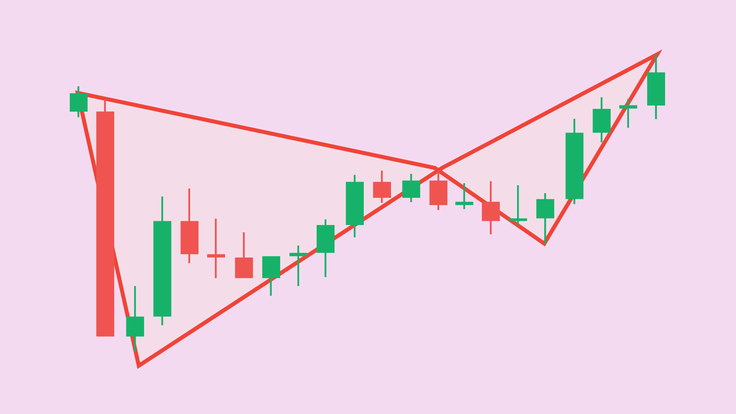
Identifying and trading the rising wedge pattern
The rising wedge signals reduced buying momentum and typically appears when an uptrend or recovery move is running out of strength.

Forex trading: main benefits explained
The forex market operates 24/5 with high liquidity and flexibility, but success relies on effective risk management and trading with a regulated broker.

The engulfing pattern: how it works
An engulfing pattern forms when one candle entirely absorbs the previous one, highlighting a strong shift between buyers and sellers.
