Support
 What are inflation-protected bonds and how do they work?
Inflation-protected bonds link their value to changes in inflation, helping investors defend against the loss of purchasing power. This article explains how they work, how they differ from conventional bonds and what risks to consider.
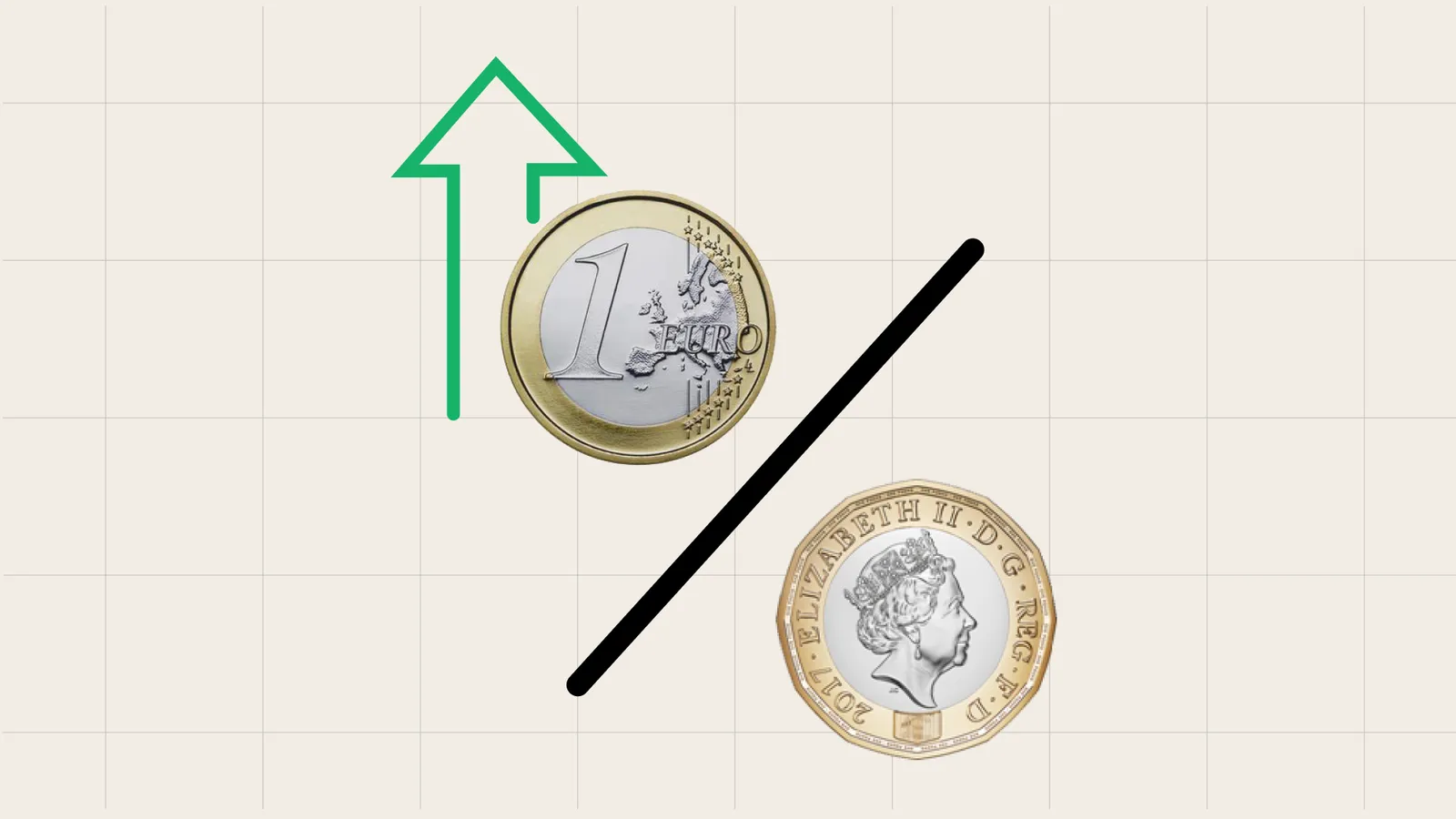
Traditional bonds can be exposed to inflation risk, as rising prices may reduce the real value of future income payments and the amount repaid at maturity.
Inflation-protected bonds aim to help preserve purchasing power by linking their principal value to an inflation index.
Returns may come from inflation adjustments, coupon payments and movements in market prices.
Inflation-protected bonds can play a role in portfolio diversification, but they are still exposed to risks such as interest-rate changes, liquidity constraints and market volatility.
What are bonds?
A bond is essentially a loan made by an investor to an organisation. When a bond is issued, the investor provides capital to the issuer in exchange for regular interest payments, known as coupons. At maturity, the issuer repays the bond's original value, known as the principal.
Bonds can be purchased individually or through investment products such as mutual funds and exchange-traded funds (ETFs).
Common bond issuers include:
- Governments
- Local authorities and municipalities
- Government agencies
- Corporations
Bonds are often used alongside other trading products to diversify portfolios and are generally considered a lower-risk asset class than stocks. However, traditional bonds can be vulnerable to inflation, as rising prices may reduce the real value of future interest payments and principal repayments.
How to buy bonds: primary vs secondary markets
Investors can buy bonds either when they are first issued or later through the secondary market. Understanding the difference can help you evaluate pricing, availability and potential investment opportunities.
Primary market
The primary market is where newly issued bonds are sold for the first time. Governments may distribute bonds through auctions, while corporate bonds are often placed through banks, dealers or underwriting syndicates. The proceeds ultimately go to the issuer to fund its borrowing needs.
Secondary market
The secondary market is where previously issued bonds are bought and sold between investors. Bond prices in the secondary market can fluctuate based on factors such as interest rates, inflation expectations, credit quality and market demand.
What is inflation and how is it measured (CPI)?
Inflation is the rate at which goods and services increase in price. If you see that inflation is currently at 4%, it means that the price of everyday goods has risen by 4% over the last twelve months. Statistical agencies measure inflation using consumer price indices, which track changes in the cost of a representative basket of goods and services.
It’s the role of central banks to keep inflation as steady as possible. A degree of inflation is healthy in a stable economy and central banks aim to keep it around 2%. Anything significantly over this target for a sustained period is considered problematic.
High inflation can affect both consumers and investors. As prices rise, the purchasing power of your income declines, meaning your money buys less than before. Inflation can also influence investment performance. Higher prices may reduce consumer spending and increase costs for businesses, which can affect company earnings and stock prices. More broadly, if an investment's returns fail to keep pace with inflation, its real value declines over time.
How inflation impacts traditional bonds
Inflation can reduce the real value of a bond's future income. This is because most traditional bonds pay a fixed rate of interest, meaning the purchasing power of those payments may decline as prices rise.
If inflation exceeds the bond's interest rate, the investor's real return can become negative, even though the bond's face value and coupon payments remain unchanged. As a result, periods of high inflation can make traditional bonds less attractive and reduce the value of the income they generate over time.
This challenge led to the development of inflation-protected bonds, which are designed to help preserve purchasing power in inflationary environments. Let's take a closer look at how they work.
Inflation-protected bonds vs conventional bonds
The main difference between inflation-protected bonds and conventional bonds is how they respond to rising prices.
A conventional bond usually pays a fixed coupon on a fixed principal amount. For example, if you buy a bond with a principal of £1,000 and a fixed coupon of 3%, the annual coupon stays at £30, regardless of what happens to inflation. This can make the income predictable, but it also means the real value of that income may fall if prices rise quickly.
Inflation-protected bonds work differently. Their principal is adjusted in line with an inflation index, and the coupon is then calculated on that adjusted principal. The coupon rate itself may be fixed, but the cash amount paid can rise when the inflation-linked principal increases.
Inflation-protected bonds may be more useful when inflation turns out to be higher than expected, because their payments are designed to move with inflation. This can help reduce purchasing power risk, which is the risk that your investment income buys less over time.
Conventional bonds may be more attractive when inflation is low or falling, or when they offer a higher nominal yield that adequately compensates investors for inflation risk. They may also appeal to investors who want simpler, more predictable cash payments.
In practical terms, the choice depends on what you want the bond to do in your portfolio. If your priority is stable nominal income, conventional bonds may be suitable. If your priority is protecting the real value of your income and capital from inflation, inflation-protected bonds may be worth considering.
How inflation-protected bonds work in practice
Inflation-protected bonds are designed to help preserve purchasing power by linking the bond's value to an inflation measure. While the exact structure varies by country and issuer, the basic principle is the same: the bond's principal is adjusted to reflect changes in inflation, and interest payments are calculated using that adjusted principal.
In the United States, these securities are known as Treasury Inflation-Protected Securities (TIPS). In the United Kingdom, they are commonly referred to as inflation-linked or index-linked bonds. Other governments and some companies may issue similar inflation-linked bonds, but the index used, the adjustment method and the repayment terms can differ.
How inflation indexation adjusts principal and coupon payments over time
Although the exact structure may differ from one bond to another, inflation-protected bonds generally follow this process:
- The investor buys bonds for a principal amount with a set maturity date.
- The principal is adjusted for inflation, increasing with rising prices and decreasing if prices fall.
- Meanwhile, interest is also applied to the principal amount. Because interest coupons are paid on the current principal sum, coupon payments will increase with inflation.
- The bond reaches maturity, so the principal is repaid. This is now larger to reflect inflation-linked rises.
Example of how an inflation-protected bond works
Suppose you buy an inflation-protected bond with a starting principal of $1,000 and a fixed annual coupon rate of 2%.
At first, the annual coupon would be:
2% × $1,000 = $20
Now assume inflation rises by 5%. The bond’s principal is adjusted upwards by the same amount, from $1,000 to $1,050.
The coupon rate is still 2%, but it is now applied to the adjusted principal:
2% × $1,050 = $21
This means the cash coupon payment increases as the inflation-adjusted principal rises. By contrast, with a conventional fixed-rate bond, the principal would remain at $1,000 and the annual coupon would stay at $20, even if inflation had increased.
At maturity, the amount repaid is based on the bond’s adjusted principal, subject to the terms set by the issuer. In this example, if the adjusted principal remained at $1,050, that would be the repayment value.
The bond’s income and repayment value can rise with inflation, helping preserve purchasing power.
Key features of inflation-protected bonds
Inflation-protected bonds are designed to help preserve the real value of an investment when prices rise. The exact structure varies by country and issuer, but most have the same basic features: an inflation-linked principal, a fixed coupon rate, and payments that are adjusted using a recognised inflation index.
The key feature is inflation indexation. This means the bond’s principal is adjusted in line with an inflation measure. For US TIPS, this is linked to the Consumer Price Index. For UK index-linked gilts, payments are typically linked to the Retail Prices Index. If the relevant index rises, the bond’s adjusted principal increases. This is sometimes called the principal uplift.
The coupon rate is different from the principal uplift. The coupon rate is usually fixed when the bond is issued, but the cash coupon payment can change because it is calculated on the inflation-adjusted principal. In simple terms:
Coupon payment = fixed coupon rate × adjusted principal
For example, if the coupon rate is 2% and the inflation-adjusted principal rises from $1,000 to $1,050, the coupon payment rises because the same 2% rate is applied to the higher principal.
Another important feature is the maturity repayment. Some government inflation-protected bonds, such as US TIPS, include a maturity floor, meaning the investor receives either the inflation-adjusted principal or the original principal at maturity, whichever is higher. However, this protection is not universal. Investors should always check the bond’s terms to understand what happens if inflation is low or prices fall.
Inflation-protected bonds are also often discussed in terms of real yield. A real yield shows the return above inflation, rather than the return before inflation is taken into account. This is useful because the bond’s principal and coupon payments are already designed to move with inflation.
Before investing, it is worth checking the product specification carefully. Key details include the inflation index used, how often adjustments are made, whether there is a maturity repayment floor, the coupon rate, the maturity date, the issuer and whether the bond is being bought directly or through a fund.
How inflation-protected bonds are adjusted for inflation
Inflation-protected bonds are usually linked to an official measure of inflation, such as the Consumer Prices Index (CPI), or another index chosen by the country or issuer. As that index rises, the bond’s principal value is adjusted upwards to reflect higher prices.
This matters because the coupon rate itself is fixed, but the cash payment you receive can change. The coupon is calculated using the inflation-adjusted principal, rather than the original amount invested.
For example:
Coupon payment = fixed coupon rate × adjusted principal
So, if inflation pushes the bond’s adjusted principal higher, the coupon payment will also increase. If prices fall, the adjusted principal can decline during the life of the bond, which may reduce future coupon payments.
The exact inflation index, timing of adjustments and protection at maturity can vary depending on the country, bond type and issuer, so it is worth checking the bond’s terms before investing.
What drives the price and returns of inflation-protected bonds?
Although inflation-protected bonds are designed to help preserve purchasing power, their market price can still rise and fall before maturity. Their returns are driven by three main factors: inflation adjustments, coupon income and price changes.
The inflation adjustment helps protect purchasing power by increasing the bond's principal when the relevant inflation index rises. This can increase both coupon payments and, depending on the bond's terms, the amount repaid at maturity.
Coupon income is based on the inflation-adjusted principal. While the coupon rate is typically fixed, the cash amount paid can rise if the adjusted principal increases.
Market prices are also influenced by real interest rates, which are interest rates after inflation has been taken into account. If real yields rise, existing inflation-protected bonds may become less attractive and their prices can fall. If real yields fall, bond prices may rise.
As a result, inflation-protected bonds can still lose value if sold before maturity, even when inflation is rising.
In simple terms, total returns can come from:
- inflation adjustments to the principal
- coupon income based on the adjusted principal
- price changes as market yields move up or down
While inflation-protected bonds can help reduce inflation risk, their performance is still influenced by market conditions, particularly movements in real interest rates.
Risks and limitations of inflation-protected bonds
Inflation-protected bonds are designed to reduce the impact of rising prices, but they are not risk-free. They can still fall in value, particularly if they are sold before maturity or held through a fund.
One important risk is interest-rate risk. Inflation-protected bonds are affected by real interest rates, which are interest rates after inflation has been taken into account. If real interest rates rise, the market price of existing inflation-protected bonds can fall as newer bonds may offer more attractive real yields.
Duration risk is closely related. Longer-dated inflation-protected bonds are generally more sensitive to changes in real interest rates than shorter-dated bonds and may experience larger price movements.
Liquidity can also be a factor. Some inflation-protected bonds may be less actively traded than conventional government bonds, making it harder to sell quickly at a favourable price.
Credit risk may also apply. While many inflation-protected bonds are issued by governments, inflation-linked bonds can also be issued by corporations and other organisations. If an issuer's financial position weakens, the bond's value may fall and there is a risk that payments may not be made as expected.
There is also inflation-measurement risk. Inflation-protected bonds are linked to a specific inflation index, such as CPI in the US or RPI for many UK index-linked gilts. This may not fully reflect the inflation experienced by individual investors.
Deflation can reduce returns. If the relevant inflation index falls, the adjusted principal may decline, which can also reduce coupon payments. Some government-issued inflation-protected bonds include a principal floor at maturity, but this does not protect against interim price falls or losses if the bond is sold before maturity.
Reinvestment risk is another consideration. If coupon payments are received when interest rates are lower, investors may not be able to reinvest that income at the same level of return.
For investors using funds or ETFs, the risks can differ from holding an individual bond. Fund values can rise or fall as the market prices of the underlying bonds changes.
In short, inflation-protected bonds can help defend against inflation, but "low risk" does not mean "no risk". Investors should still consider interest rates, duration, liquidity, credit risk, the inflation index used, deflation scenarios and whether they are holding an individual bond or a fund.
How to invest in inflation-protected bonds
Investors can access inflation-protected bonds in a few different ways, depending on the market they are investing in and the products available through their broker or investment platform.
One option is to buy individual inflation-protected government bonds where they are available. For example, the UK has index-linked gilts, while the US has Treasury Inflation-Protected Securities, or TIPS. Holding an individual bond to maturity can give investors a defined maturity date and a clearer idea of how the repayment mechanism works, although the bond’s market value can still rise or fall before then.
Another option is to invest through a bond fund, exchange-traded fund or mutual fund that focuses on inflation-linked securities. Funds can provide exposure to a range of bonds rather than a single issue, which can help with diversification. However, the value of a fund will fluctuate with the market and investors do not have the same certainty of a specific maturity repayment as they would with an individual bond held to maturity.
The right route depends on an investor’s time horizon, inflation outlook and tolerance for risk. Before investing, it is worth checking which inflation index is used, how the bond or fund is structured, what charges apply and whether the investment fits the wider portfolio.
How to learn more about bonds and portfolio diversification
Building a diversified portfolio starts with understanding how different asset classes and trading products work. Equiti's educational resources can help you learn more about bonds, portfolio diversification and the fundamentals of online trading.
You can also use a demo account to explore the markets and practise trading strategies in a simulated environment before committing real capital.
When you're ready, you can apply what you've learned by trading a range of global markets through Equiti's trading platforms.
FAQ
Can the market price fall before maturity even if inflation is high?
Yes. Inflation-protected bonds can fall in market value before maturity if real interest rates rise. This is because newer bonds may offer more attractive real yields, making existing bonds less valuable in the market.
Their principal and coupon payments may still adjust with inflation, but that does not remove short-term price volatility. Investors who sell before maturity may receive more or less than expected.
What are the main risks of inflation-protected bonds?
The main risks include interest-rate risk, duration risk, liquidity risk and credit or sovereign risk. If real interest rates rise, the market price of an existing inflation-protected bond can fall.
Longer-dated bonds are usually more sensitive to changes in real yields than shorter-dated bonds. Liquidity risk can also matter if the bond is not actively traded, while credit or sovereign risk depends on the financial strength of the issuer.
How do inflation-protected bonds compare with nominal government bonds and high-yield bonds?
Inflation-protected bonds may be more useful when inflation is rising or higher than expected, because their principal adjusts in line with an inflation index and coupons are calculated on the adjusted amount.
Nominal government bonds usually offer fixed payments, which can be more predictable but more exposed to inflation erosion. High-yield bonds may offer higher coupons, but usually because they carry greater credit risk and are not primarily designed to protect purchasing power.
What's the difference between inflation-protected bonds and bond funds?
Buying an individual inflation-protected bond gives the investor a defined maturity date and clearer repayment terms, assuming the bond is held to maturity. The bond’s market value can still rise or fall before then, but the investor can look at the bond’s own terms to understand how principal and coupon payments are adjusted.
Bond ETFs and mutual funds provide exposure to a range of inflation-linked securities rather than a single bond. This can help with diversification and may make access easier. However, funds do not usually provide the same specific maturity repayment certainty as an individual bond held to maturity, and their value can fluctuate with the market.
How should investors decide how much to allocate to inflation-protected bonds?
The right allocation depends on an investor’s time horizon, inflation outlook and tolerance for risk. Inflation-protected bonds may suit investors who want to reduce purchasing power risk and add inflation-sensitive assets to a diversified portfolio.
However, they are not risk-free and rarely offer high returns. They should usually be balanced with other assets, such as conventional bonds, equities or higher-risk income products, depending on the investor’s goals.