Help
Help The Fed second oil shock: inflation, interest rates and the December decision
The question facing the Federal Reserve is no longer whether higher energy prices will lift inflation. September’s figures have already confirmed that. The harder question is whether the shock will fade with oil prices or work its way into the wider economy, forcing the Fed to keep interest rates higher even as households and businesses lose purchasing power.
U.S. headline inflation accelerated to 3.7% year-over-year.
A rate increase before November 3 would give Trump another visible economic headwind.
10-year yield fell around 1.8%.
Why the oil shock may outlast the initial inflation spike
Headline inflation accelerated to 3.7%, with gasoline prices rising 9.1% and accounting for more than half of the monthly CPI increase. Yet core inflation also moved higher, reaching 2.6% annually from 2.4%, despite holding at 0.3% month on month.
The distinction matters because the Fed can look through a temporary energy surge more easily than a shock that starts influencing the prices of goods and services. The core reading moved higher but does not prove that a second inflation wave has begun, but it assumes that quick reversal is less comfortable.
Diesel is where that risk becomes more complicated
The IEA reported that diesel refining margins approached $95 a barrel in September, as disruptions in Russia and the Middle East removed around 1.3 million barrels a day of diesel exports. Tight conditions could persist into 2027.
The crack spread matters because crude oil and refined diesel do not move in lockstep. Even if crude supply recovers, damaged refining capacity, disrupted trade and depleted inventories can keep diesel expensive. Freight operators then face higher costs, which may eventually reach manufacturers and retailers. Whether consumers ultimately pay more depends on demand and companies’ pricing power, but prolonged diesel tightness would make disinflation harder to achieve.
The Fed cannot repair energy infrastructure or reopen shipping routes
Its influence begins with the demand side, where higher borrowing costs can limit companies’ ability to pass on additional expenses. That is an imperfect response to a supply shock, and the longer the disruption lasts, the greater the risk that policymakers must choose between tolerating persistent inflation and adding pressure to economic activity.
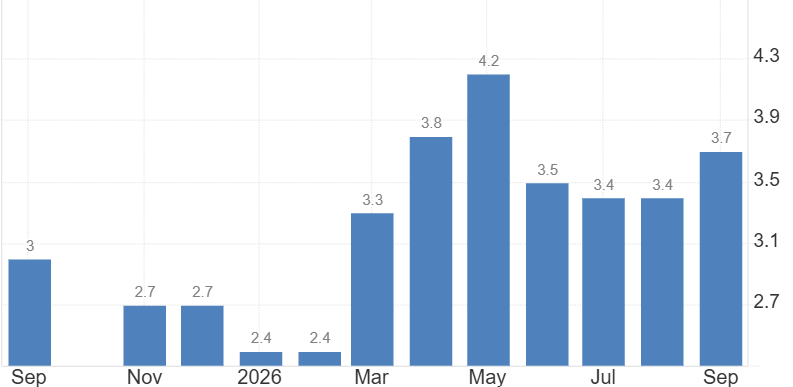
Source: U.S. Bureau of Labor Statistics
A hold would help Trump, but would it help the Fed?
The October meeting concludes less than a week before the November 3 midterm elections. That timing makes a rate increase particularly uncomfortable for the Trump administration. Higher borrowing costs would add another headwind for households and businesses already dealing with expensive fuel, while affordability remains a central political concern.
A hold would postpone that pressure and give Trump breathing room before voters go to the polls. Market expectations have shifted after the inflation report, but they still leave room for a pause, putting the probability of a hold at around 70%, down from 80% before the release.
The political argument is therefore not just about appearances
A pause would have a direct benefit for Trump by avoiding an immediate increase in borrowing costs before the election. The Fed can point to the lagged effects of previous rate hikes and the need for more data, but that rationale also gives policymakers a way to delay an economically and politically costly decision. The question is whether the election is influencing the timing of a decision that would otherwise be driven by inflation.
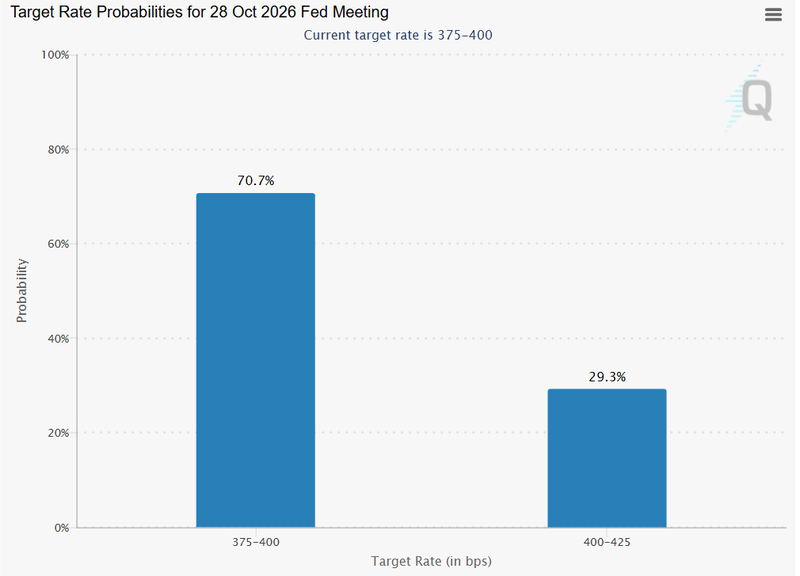
Source: CME Group
What would force the Fed’s hand?
The shift from September to October comes down to a change in the balance of risks. At its September meeting, the Fed raised rates by 25 basis points, judging that economic activity remained solid, unemployment was stable at 4.1%, and inflation was still too high. Policymakers acknowledged some weakness in hiring but considered labour-market risks broadly balanced and inflation the more immediate threat.
The picture became more complicated after the meeting
September payrolls increased by only 29,000, and unemployment rose to 4.2%, strengthening concerns that higher rates could further weaken hiring. Yet headline inflation simultaneously accelerated to 3.7%, while core inflation also picked up. The Fed is therefore facing opposing signals: employment is losing momentum, but inflation is moving further away from its 2% objective.
That is the case for an October pause, but it also reopens the question of September’s hike, if policymakers now give greater weight to labour-market weakness, they will need to explain what has changed enough to justify a different approach after raising rates only weeks earlier.
The timing adds another layer
If the Fed pauses in October and tightens soon after the election, questions about the sequence will become harder to avoid. The decision may be justified by changing economic conditions, but the proximity of the midterms could reinforce the perception that political considerations influenced when the central bank acted.
Markets may not treat a pause as an all-clear
Treasury yields initially rose after the CPI release, but the 10-year yield subsequently fell to 5.105%. The reversal points to a more complicated policy outlook. Inflation is pushing the Fed towards tighter policy, while concerns about slowing economic activity are raising the cost of another rate increase. The bond market is weighing both risks rather than treating the latest inflation reading as an automatic signal for higher rates.
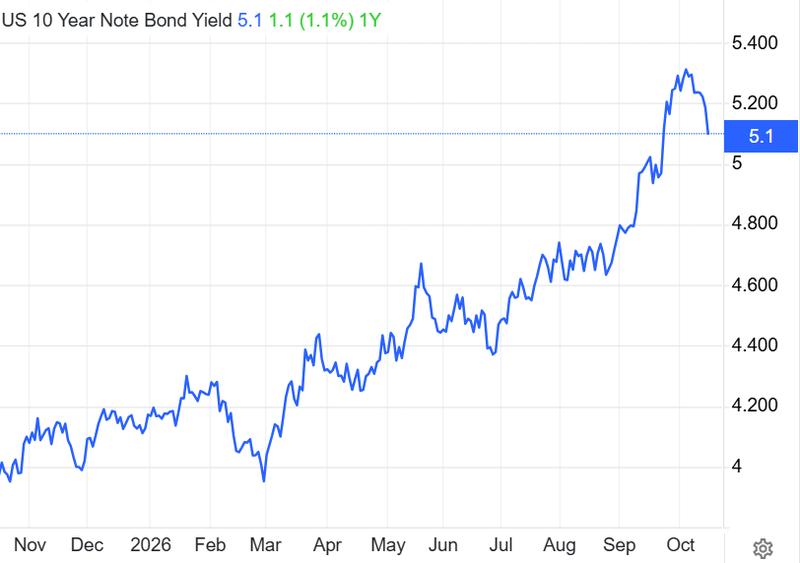
Source: Trading economic
Expectations for December remain hawkish
Markets assigning an 86% probability to a rate hike. That suggests investors may expect the Fed to hold in October while keeping further tightening on the table. Whether that happens will depend on the next inflation and labour-market readings. If core prices remain firm and employment hold up, policymakers will have less reason to delay. If hiring weakens, unemployment rises and inflation outside energy begins to ease, the case for another increase becomes harder to sustain.
The difficulty is that these signals could move in opposite directions
Persistently high diesel costs may keep inflation elevated just as weaker employment reduces households’ ability to absorb higher prices. Raising rates would do little to resolve the supply disruption but holding them could leave broader inflation pressure in place. An October pause would therefore postpone the decision rather than settle it. The December meeting will test whether inflation remains the greater threat or whether the labour market is weakening enough to change the balance.