
 Help
Help 
Market Insights
In-depth insights on market events and major trades
The debasement of the U.S. Dollar: A long descent
Despite the endless doom-and-gloom headlines, the U.S. dollar isn’t collapsing—it’s evolving. What many call “debasement” is largely the natural effect of inflation in a growing economy, not the destruction of value. While fiscal deficits, money printing, and inflation are real challenges, global confidence in the dollar remains unshaken. It’s still the backbone of global finance because no viable alternative exists.

Dollar rebound turns short bets into a pain trade for global investors
The dollar’s rebound to two-month highs is upending one of this year’s most popular trades: betting against the greenback. Despite the U.S. government shutdown and expectations of multiple Fed rate cuts, the dollar has strengthened as global peers weakened, Treasury yields stayed firm, and investors sought safety.

Analysis of the inverted yield curve in the US bond market
This article analyses, from a general perspective, the phenomenon of the inverted yield curve in US bond markets. It also examines the relationship between yield-curve inversions and labour-market outcomes. To reach the conclusions described, a historical framework is assessed with the aim of contrasting past episodes with the current economic situation of the United States.

China’s gold strategy: Courting foreign reserves to reshape global finance
China is positioning itself as a custodian for foreign sovereign gold reserves through the Shanghai Gold Exchange (SGE). By encouraging partner nations to buy and store gold inside its borders, Beijing aims to expand its role in global finance, reduce reliance on the U.S. dollar, and strengthen its monetary influence. The strategy comes amid record central bank gold buying, geopolitical tensions, and gold’s surge above $3,700 an ounce.

Long-term treasury yields and mortgage rates jump after Fed cut
The Federal Reserve’s latest rate cut pushed the effective federal funds rate lower, but long-term Treasury yields and mortgage rates moved sharply higher. The steepening yield curve shows bond investors are more focused on inflation risks and heavy supply than on short-term policy guidance.

Latin America’s role in the new global economic context
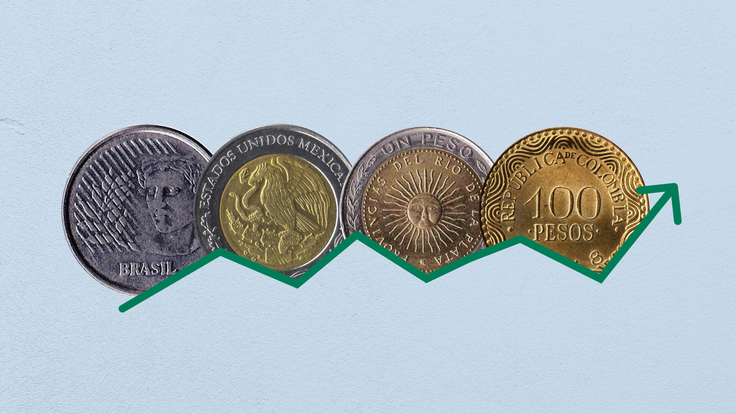
As geopolitics escalate and U.S. trade policy becomes increasingly protectionist, Latin America's combination of macroeconomic resilience, strong market performance, and deep commodity resources makes the region both a stabilizing influence and a beneficiary, although with significant policy and diplomatic implications.
Fundamental review of U.S. stocks post-Q2 results
U.S. corporates posted broadly solid Q2 2025 results, with widespread beats on earnings and revenue. Yet elevated multiples and heavy market-cap concentration point to stretched valuations, even as U.S. equities have lagged several global benchmarks year to date.

Is the Federal Reserve's inflation fight over?
The Fed stands on the brink of a potential rate cut.
What are the 10 strongest currencies in the world?
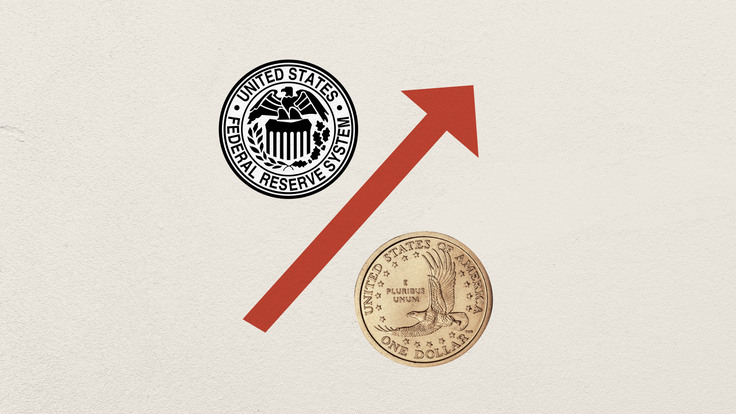
What is the strongest currency in the world? When strength is viewed exclusively as a function of how much of another currency it can buy, the strongest currency is the one that will buy you the most of a reference currency.

Why the Mexican peso has stayed strong despite U.S. pressure?
Despite rising U.S.–Mexico tensions, the Mexican peso has continued to appreciate. Recent data suggest this move is not primarily driven by carry-trade dynamics; instead, the currency has been supported by Mexico’s macroeconomic stability, resilient growth outlook and proactive diplomatic positioning.
