Help
Help What is a recession? Causes, signs and market impact
A recession is a broad decline in economic activity that can affect employment, spending, businesses and financial markets. Understanding what causes recessions and how markets respond can help investors and traders make sense of changing economic conditions.
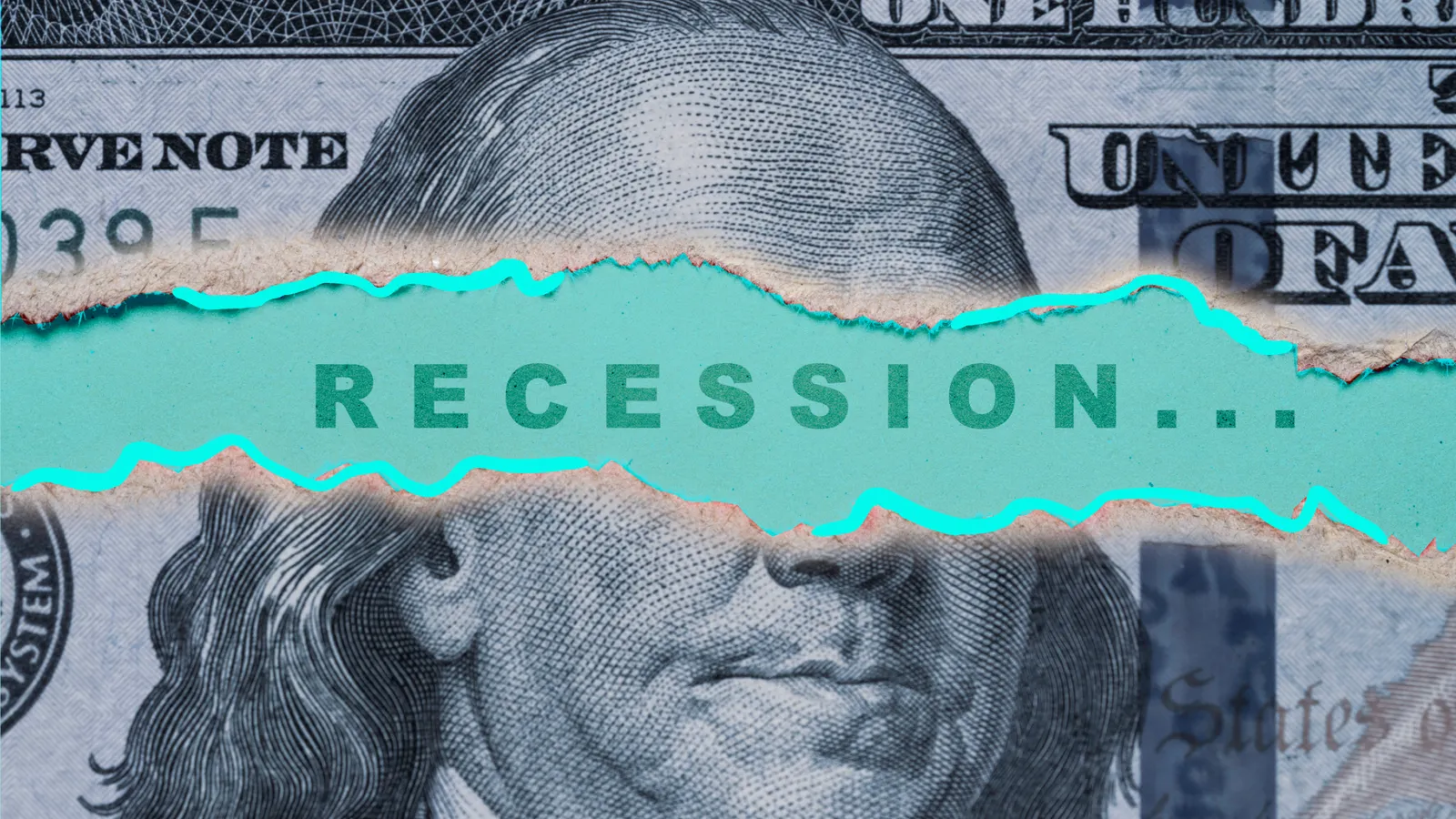
A recession is a broad and sustained decline in economic activity, although there is no single definition used worldwide.
Two consecutive quarters of falling real GDP is a common recession measure, but indicators such as employment, income, spending and production can provide a broader picture.
Recessions can result from factors such as high interest rates, financial crises, supply shocks and sudden declines in demand.
Stocks, bonds, currencies and commodities can respond differently depending on the cause of the recession, inflation and the policy response.
Financial markets often move before a recession is officially identified because prices reflect expectations about future economic conditions.
How is a recession defined?
A recession is a period of broad and sustained decline in economic activity. It typically affects several parts of the economy at the same time, including employment, consumer spending, business activity and overall economic output.
Recessions can vary considerably in length and severity. Some involve relatively mild declines in activity, while others lead to sharper falls in employment, spending and investment.
What makes an economic contraction a recession?
Not every period of weaker economic activity is considered a recession. A temporary decline in one industry, a single weak employment report or a short-lived fall in consumer spending may have a limited effect on the wider economy.
A recession generally involves weakness that becomes more widespread and persists over time. Falling demand, for example, can reduce business revenues and production, leading companies to cut investment or hiring. These effects can then spread to household incomes and spending, putting further pressure on economic activity.
Two consecutive quarters of falling real GDP
One commonly used definition of a recession is two consecutive quarters of negative real gross domestic product (GDP) growth. Real GDP measures the value of goods and services produced by an economy after adjusting for inflation.
This two-quarter rule provides a simple way to identify a sustained decline in economic output and is frequently used in financial reporting. However, it is not a universal definition of recession. GDP figures can also be revised as more complete economic data becomes available.
How the NBER identifies US recessions
In the US, recessions are officially dated by the National Bureau of Economic Research (NBER) Business Cycle Dating Committee. Rather than relying only on two consecutive quarters of falling GDP, the committee considers whether there has been a significant decline in economic activity that is spread across the economy and lasts more than a few months.
Its assessment considers several measures of economic activity, including employment, real income, consumer spending, industrial production and sales. This broader approach means a US recession can be identified even when GDP does not fall for two consecutive quarters.
Other countries may identify or describe recessions differently, so the criteria used can vary between economies.
What happens to markets during a recession?
Recessions can affect financial markets in different ways as investors adjust their expectations for economic growth, company earnings, interest rates and financial risk. Stocks and growth-sensitive commodities may come under pressure, while government bonds, gold and some currencies can attract greater attention during periods of uncertainty.
However, there is no single pattern that applies to every recession. Market performance can depend on what caused the downturn, inflation, interest rates, asset valuations and how governments and central banks respond.
Stocks and corporate earnings
Stock markets often come under pressure during recessions as weaker economic activity affects company revenues and earnings. Businesses that depend heavily on consumer spending or economic growth may be particularly sensitive to falling demand.
Uncertainty can also lead to greater market volatility. Measures such as the VIX, which tracks expected volatility in the US stock market, have historically risen during periods of economic and financial stress.
Importantly, stock markets do not necessarily move in line with current economic data. Share prices reflect expectations about the future, so markets may fall before a recession is officially recognised. They can also begin recovering while economic conditions remain weak if investors expect lower interest rates, government support or an improvement in company earnings.
Government bonds and credit spreads
Government bonds can attract demand during recessions, particularly when investors become more cautious or expect central banks to lower interest rates. Higher bond demand can push prices up and yields down.
However, this relationship is not guaranteed. High inflation, government borrowing and expectations for future interest rates can all affect how bond markets respond during an economic downturn.
Credit spreads can also provide information about financial conditions. A credit spread is the difference between the yield on corporate debt and the yield on comparable government debt. Spreads often widen during periods of economic stress as investors demand greater compensation for the risk of companies being unable to repay their debt.
Safe-haven currencies
Some currencies may attract demand when investors become more cautious. The US dollar, Japanese yen and Swiss franc have historically been viewed as potential safe-haven currencies during periods of global market stress.
Their performance can still vary considerably between recessions. Interest rates, central bank policy, inflation and conditions within the currency’s home economy can all influence exchange rates. This means a currency that has acted as a haven in previous downturns may not respond in the same way every time.
Commodities and gold
Recessions can reduce demand for commodities that are closely linked to economic activity. Lower industrial production, construction and transport activity, for example, can weigh on demand for oil and industrial metals.
Gold can behave differently because it is often viewed as a safe-haven asset. Economic uncertainty, lower real interest rates and increased demand for defensive assets can support gold prices during some downturns.
However, gold does not always rise during periods of stress. Prices can still fall or experience significant volatility, particularly when investors sell assets to raise cash or when changes in interest rates and the US dollar outweigh safe-haven demand.
Why do markets move before a recession is officially declared?
Financial markets are forward-looking, while recession assessments are based largely on economic activity that has already taken place. Investors therefore adjust their expectations as new information emerges rather than waiting for a recession to be officially recognised.
Economic data can also take time to provide a clear picture. Figures for GDP, employment, spending and business activity are released at different times and may later be revised. In the US, for example, the NBER determines recession dates after assessing a range of economic indicators, which means a recession may be identified only after it has already begun.
Markets may respond earlier to signs of weaker demand, falling earnings expectations, tighter credit conditions or potential changes in central bank policy. As a result, an official recession announcement does not necessarily provide a clear signal about where markets will move next.
The same principle applies during a recovery. Markets can begin rising while unemployment remains high or economic activity is still weak if investors expect conditions to improve. This is why expectations about future growth, inflation, interest rates and earnings can sometimes have a greater immediate influence on markets than the recession label itself.
What are the first signs of a recession?
Recessions are rarely identified by a single economic indicator. Instead, economists and market participants look for persistent weakness across several areas of the economy.
The labour market can provide important warning signs. Rising unemployment, slower hiring, fewer job openings and declining hours worked can indicate that businesses are responding to weaker demand. Consumer spending may also slow as households become more cautious about their finances.
Other indicators that can point to increasing recession risk include:
- slowing or falling real GDP
- rising unemployment and weaker hiring
- lower consumer spending and retail sales
- weaker business investment
- declining manufacturing and industrial activity
- tighter credit conditions
- falling consumer and business confidence
Financial markets can provide additional signals. One widely followed example is an inverted yield curve, which occurs when yields on shorter-term government bonds rise above those on longer-term bonds.
In the US, inversions of parts of the Treasury yield curve, including the 10-year/2-year and 10-year/3-month spreads, have occurred before several previous recessions. However, an inverted yield curve does not mean a recession will begin immediately or necessarily occur. Its significance depends on factors including monetary policy, inflation and wider economic conditions.
For traders and investors, recession risk is therefore generally clearer when several indicators begin weakening together rather than when one data release or market signal changes in isolation.
Why do recessions happen?
Recessions can happen for many reasons, and there is rarely one single cause. Economic activity may weaken following changes in interest rates, financial crises, sudden disruptions to supply or demand, or unexpected events that affect businesses and consumers.
Common causes and contributing factors include:
- high interest rates: Higher borrowing costs can reduce household spending, business investment and demand for credit.
- high inflation and tighter monetary policy: Persistent inflation can lead central banks to raise interest rates, which may slow economic activity.
- asset-price declines: A sharp fall in property, stock or other asset prices can reduce household wealth, weaken confidence and create losses for financial institutions.
- financial and credit crises: Problems within banks or credit markets can make borrowing more difficult or expensive, limiting spending and investment.
- supply shocks: Disruptions to energy, raw materials, labour or supply chains can increase costs and reduce production.
- external shocks: Pandemics, wars and other major disruptions can affect trade, travel, investment, production and consumer behaviour.
These factors can also reinforce one another. For example, a supply shock can push inflation higher, prompting central banks to raise interest rates. Higher rates can then increase borrowing costs and weaken spending and investment, adding further pressure to economic growth.
The cause of a recession can influence how governments and central banks respond. Central banks may lower interest rates or provide liquidity when inflation allows, while governments may use measures such as tax relief, transfers or increased public spending to support economic activity. When inflation remains high, however, policymakers may have less room to stimulate demand without adding to price pressures.
For financial markets, the cause and policy response can be as important as the recession itself. A downturn caused by high inflation and rising interest rates, for example, can affect bonds, currencies and commodities differently from one caused by a financial crisis or sudden collapse in demand.
Cyclical sectors vs defensive sectors
Different sectors can respond differently to a recession depending on how closely they are tied to economic growth and spending.
Cyclical sectors tend to be more sensitive to changes in the economy. When growth slows, households and businesses may cut back on non-essential spending and investment, which can affect company revenues and earnings. Common examples include consumer discretionary, industrials, materials, energy and financials.
Defensive sectors provide goods and services that people generally continue to need even when the economy weakens. Healthcare, utilities and consumer staples are common examples, as demand for essentials such as food, electricity and healthcare tends to be more stable.
Defensive sectors can therefore be more resilient during recessions, while cyclical sectors may face greater pressure. However, these patterns are not guaranteed. Valuations, interest rates, company earnings and the cause of the recession can all influence how individual sectors perform.
Markets can also anticipate an economic recovery before the data improves, meaning cyclical sectors may begin to recover while the wider economy is still weak.
What market indicators do investors watch during recession risk?
Investors often monitor a combination of economic and financial-market indicators to assess recession risk and how changing conditions could affect different assets. No single indicator can reliably predict when a recession will begin.
Common indicators include:
- Yield curves: An inverted yield curve, where short-term government bond yields rise above longer-term yields, has historically preceded some recessions.
- Credit spreads: Wider spreads can indicate that investors see greater risk in lending to companies.
- Corporate earnings: Falling earnings forecasts can signal expectations for weaker demand and business conditions.
- Labour market data: Rising unemployment and slower hiring can point to weakening economic activity.
- Consumer and business activity: Falling consumer confidence, new orders, manufacturing activity or business investment can provide further signs of slowing growth.
Because these indicators can change at different times, investors often consider several measures together rather than relying on one signal.
How can investors prepare for a recession?
Preparing for a possible recession is less about predicting exactly when one will happen and more about understanding how a portfolio could respond if economic conditions weaken.
Investors may review their exposure to cyclical sectors, credit risk and individual companies or industries, as well as whether their portfolio is sufficiently diversified. Liquidity can also be important, particularly during periods of higher volatility when some assets may become harder to sell at expected prices.
Different approaches will depend on an investor’s goals, time horizon and risk tolerance. Long-term investors may focus on diversification and portfolio balance, while active traders may pay closer attention to leverage, volatility and risk limits.
How long do recessions last?
There is no fixed length for a recession. Some last only a few months, while others continue for a year or longer, depending on what caused the downturn, the condition of the economy and how governments and central banks respond.
A recession is generally a temporary phase of the business cycle, but its length does not necessarily reflect its severity. A short recession caused by a sudden shock can still lead to sharp declines in economic activity and significant market volatility.
For traders and investors, it is also important to distinguish between the length of a recession and the length of a market downturn. Financial markets are forward-looking, so asset prices may begin falling before a recession starts and recover before economic data shows a clear improvement.
Economic indicators can also recover at different speeds. GDP may begin growing again while unemployment remains elevated or consumer spending and corporate earnings are still recovering. This means the official start and end dates of a recession do not necessarily provide clear signals for market timing.
Recession vs depression: how economic downturns differ
A recession and a depression both describe periods of declining economic activity, but they differ mainly in their severity and duration.
A recession is a broad decline in economic activity that can affect output, employment, consumer spending and business investment. Recessions are a recurring part of the economic cycle and can vary considerably in length and severity.
A depression generally refers to a much deeper and more prolonged economic downturn. There is no universally accepted definition or specific threshold, but depressions are associated with severe and sustained declines in economic output and employment, often alongside significant financial and credit stress.
The main difference between a recession and a depression is therefore the scale and persistence of the economic decline. A recession can cause substantial economic and market disruption, but a depression describes a much more extreme and relatively rare downturn.
It is also important to distinguish both from a slowdown, where economic growth weakens but may remain positive. Similarly, a bear market refers to a significant decline in asset prices and does not necessarily mean the economy is in recession or depression.
FAQs
Is two quarters of falling real GDP always a recession?
No. Two consecutive quarters of negative real GDP growth is a commonly used definition of recession, but it is not a universal rule. In the US, the NBER considers a broader range of economic indicators, including employment, income, consumer spending, sales and industrial production.
What are the early warning signs of a recession?
Possible warning signs include rising unemployment, slower hiring, weaker consumer spending, falling business investment and declining manufacturing activity. Financial indicators such as an inverted yield curve and widening credit spreads can also signal expectations of weaker economic conditions.
Can stock markets rise during a recession?
Yes. Stock markets are forward-looking and can begin recovering while economic conditions remain weak. Investors may start pricing in lower interest rates, improving company earnings or stronger future growth before these changes appear in economic data.
Should investors sell stocks during a recession?
A recession does not automatically mean stocks will continue falling or that selling is the right response. Markets can decline before a recession begins and recover before it ends. Decisions depend on factors including an investor’s objectives, time horizon, portfolio exposure and tolerance for risk.
Are defensive sectors and safe-haven assets risk-free during a recession?
No. Defensive sectors and assets commonly viewed as safe havens, such as government bonds, certain currencies and gold, can still fall in value or experience significant volatility. Their performance depends on factors including interest rates, inflation, liquidity and the cause of the downturn.
How can a US recession affect forex and commodities?
A US recession can affect currencies through changing interest-rate expectations, demand for safe-haven assets and expectations for US economic growth. Growth-sensitive commodities such as oil may face weaker demand, while gold can attract greater interest during periods of uncertainty. These patterns can vary between recessions.